
Black marks on clean laundry usually come from washer buildup, worn parts, or grease. Learn the common causes and when to call for washer repair in West Michigan.
Black marks on clothes after washing usually mean something inside the washer is transferring residue onto fabric, most often grease from worn bearings, grime trapped around the drum, detergent and softener buildup, or debris coming loose during the cycle. In Grand Rapids, Kalamazoo, Lansing, and across West Michigan, this problem is common in washers that see heavy family use, hard water buildup, or long gaps between cleanings.
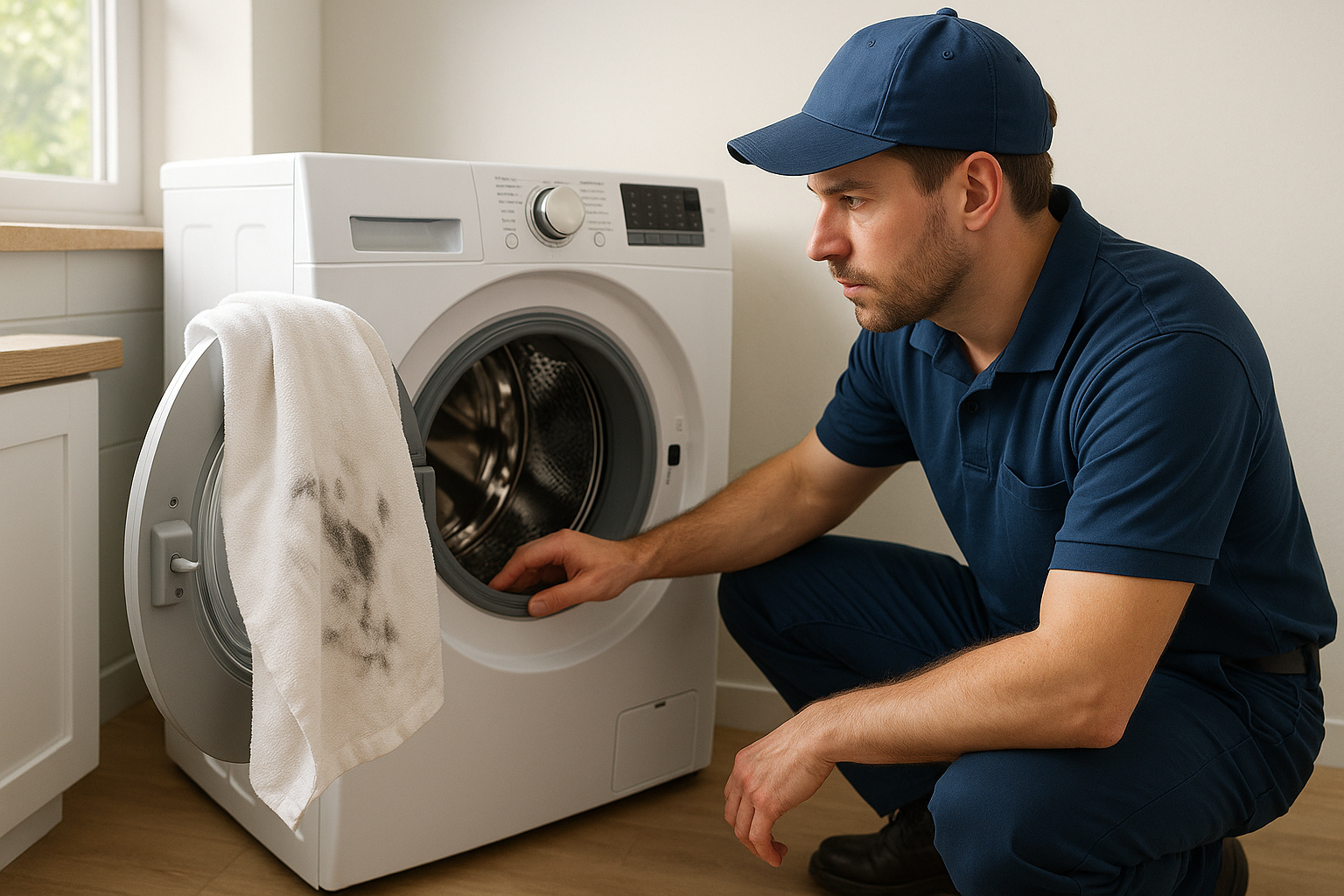
If the marks look oily, smudgy, or gray-black rather than rusty orange, the issue is usually not your detergent alone. Some causes are simple to address. Others are mechanical problems that are much cheaper to catch early than after the machine starts leaking, grinding, or failing to spin.
What black marks on laundry usually mean
When a washer leaves black marks, the source typically falls into one of four categories:
- Buildup inside the washer, especially around the drum, gasket, agitator, or detergent drawer
- Worn mechanical parts such as bearings, seals, belts, or pulleys
- Foreign material inside the drum, including grease, adhesive, or rubber debris
- Drainage or water flow issues that allow dirty residue to redeposit on clothes
The exact appearance of the mark matters. Thin black streaks often point to rubber or grease contact. Smudgy gray patches can come from buildup loosening inside the machine. Tiny dark specks may mean deteriorating rubber parts or grime trapped behind the drum. If the marks feel oily when you rub them, that is a stronger clue that a seal or bearing issue may be developing.
The most common cause: buildup around the washer drum and gasket
In front-load washers, the rubber door gasket is one of the first places we check. Soap residue, body oils, dirt, lint, and moisture collect in the folds. Over time, that grime turns dark and can transfer to clothing, especially lighter fabrics, towels, and workout gear.
This is even more common in Michigan homes where laundry loads are frequent in spring, with muddy clothes, sports uniforms, and heavy household fabrics making their way through the washer. If you use too much detergent or leave the washer door closed between cycles, buildup happens faster.
Check these areas:
- Inside the rubber door boot or gasket folds
- Around the inner edge of the drum
- The detergent dispenser tray
- The washer filter area if your model has one
If you already suspect maintenance buildup, start with our guide on how to fix a smelly washing machine. A clogged filter or dirty trap can keep grime circulating through the machine.
Could it be grease from bearings or a tub seal?
Yes. If the black marks are greasy, dark, and hard to wash back out, worn bearings or a failing tub seal are high on the list.
Your washer has moving components that rely on proper sealing and lubrication. When the seal starts failing, grease can migrate where it should not be. That grease may reach the wash basket area and smear onto clothes. This is more serious than simple buildup because it usually means internal wear is progressing.
Warning signs that point to bearings or seals instead of surface grime include:
- A rumbling or grinding sound during spin
- Water under or behind the washer
- Play or looseness in the inner basket
- Black marks that feel oily or tar-like
- Repeated staining even after cleaning the machine
If your washer is also showing moisture around the base, read what causes a washing machine to leak. Leaks and black marks together often mean the machine needs professional diagnosis.
Rubber parts can shed black residue too
Another possibility is deteriorating rubber. Drive belts, suspension components, hoses, and door gaskets can wear down over time. Small bits of black rubber may break loose and end up on laundry, especially during high-speed spin cycles.
This can happen gradually. You may first notice one or two black lines on a white shirt, then more frequent staining over the next few weeks. If the washer also smells hot or you hear squealing, a belt or friction-related issue becomes more likely.
A related symptom is a hot or burning odor during operation. If that is happening, see our breakdown of washing machine burning smell causes and fixes. That combination should not be ignored.
Hard water and detergent residue can make the problem worse
Across West Michigan, mineral-heavy water can contribute to washer buildup. Hard water mixes with detergent and fabric softener and leaves behind sticky residue. Over time, that residue traps lint, dirt, and mildew. Eventually it loosens and redeposits on clothes as dark streaks or smears.
This is one reason the problem may show up even if your washer does not have a major part failure. You may simply have a machine that needs a deep cleaning and a change in laundry habits.
Try these corrections:
- Use the detergent amount recommended for HE washers, not more
- Cut back on fabric softener if you use it regularly
- Run a washer cleaning cycle monthly
- Wipe the door gasket dry after each wash
- Leave the door open between loads to reduce moisture buildup
- Clean the dispenser drawer and filter routinely
These steps help, but if the stains continue after two or three clean cycles, the source is likely deeper than surface residue.
Check the drum for hidden debris
Sometimes the answer is surprisingly simple. Bra wires, small screws, hairpins, melted rubber-backed mats, pocket residue, adhesive from labels, or even pen ink can create dark marks that look like a machine failure.
Look carefully inside the basket and around the paddles or agitator. Run your hand along the drum openings. If you find a rough spot, foreign object, or sticky area, that may explain isolated marks on clothing.
Also think about what went into the washer just before the problem started. Shop rags, greasy uniforms, automotive towels, or items with rubberized backing can leave material behind that transfers to the next load.
Is it safe to keep using the washer?
Sometimes, briefly. Often, no.
If you believe the issue is simple buildup, it is reasonable to pause normal laundry, run a cleaning cycle, inspect the gasket and drum, and test the washer with a few old towels. But if you notice greasy residue, loud spin noise, leaking, or repeated staining after cleaning, continuing to run the machine can make the repair more expensive.
A failing bearing or seal will not correct itself. The longer it runs, the more wear spreads to other components. That can turn a targeted repair into a much bigger job.
What you can do before calling for service
Before scheduling repair, take these steps:
1. Clean the gasket and detergent drawer
Use a cloth with warm water and mild cleaner. Pull back the rubber folds and remove any black slime or residue.
2. Run a cleaning cycle
Use a washer cleaner approved for your machine or follow the manufacturer guidance. Avoid combining random chemicals.
3. Inspect for leaks and noise
Run a rinse and spin cycle with the machine empty. Listen for grinding, squealing, or heavy rumbling. Check underneath for moisture.
4. Wash a test load of old white towels
If the marks come back, the issue is probably not just cosmetic buildup.
5. Stop washing delicate or light-colored items
Do not keep risking good clothing while you are troubleshooting.
When to call HomeHalo Appliance Repair
Call for professional service if:
- Black marks keep showing up after a thorough cleaning
- The washer is leaking, shaking, or making grinding noise
- The marks feel oily or greasy
- You see rubber fragments or smell something burning
- The inner basket feels loose or uneven
At HomeHalo, we repair washers across Grand Rapids, Kalamazoo, Lansing, and surrounding West Michigan communities. We work on all major brands and handle residential and commercial laundry equipment.
If your washer needs diagnosis, HomeHalo’s diagnostic fee applies toward the repair when appropriate. In many cases, catching the issue early prevents more damage and gets your laundry routine back to normal faster.
The bottom line
A washer leaving black marks on clothes is usually caused by buildup, worn seals or bearings, deteriorating rubber parts, or debris inside the machine. If a cleaning cycle and inspection solve it, great. If not, the machine is telling you something is wearing out.
Ignoring the problem usually means more stained clothes and a greater chance of a leak or breakdown. A timely diagnosis is the safest move, especially if you are hearing noise, seeing water, or noticing oily residue.
Need washer repair in Grand Rapids, Kalamazoo, Lansing, or nearby West Michigan? HomeHalo Appliance Repair services all major washer brands for residential and commercial customers. Call to schedule at https://homehalorepair.com/contact/ or call (616) 367-5131.
Need appliance repair in West Michigan?
Same-day service available. Honest pricing. nearly 600 five-star reviews.
Find appliance repair near you
Need help with an appliance? Choose your nearest city to explore repair services and nearby coverage.
When to Call a Professional
- → The appliance makes burning, sparking, or unusual electrical smells
- → DIY troubleshooting hasn't resolved the issue after one attempt
- → The repair involves gas lines, electrical components, or sealed refrigerant systems
- → The appliance is still under warranty (DIY may void it)
HomeHalo serves Grand Rapids, Lansing, Kalamazoo & West Michigan. (616) 367-5131
💡 Key Takeaway
When in doubt, a professional diagnosis costs less than guessing wrong. HomeHalo provides free estimates and upfront quotes, you'll know the cost before any work begins. Call (616) 367-5131 for same-day service across West Michigan.