Learn why your dryer feels hot outside, what Michigan homeowners should check first, and when to call HomeHalo for safe dryer repair in West Michigan.
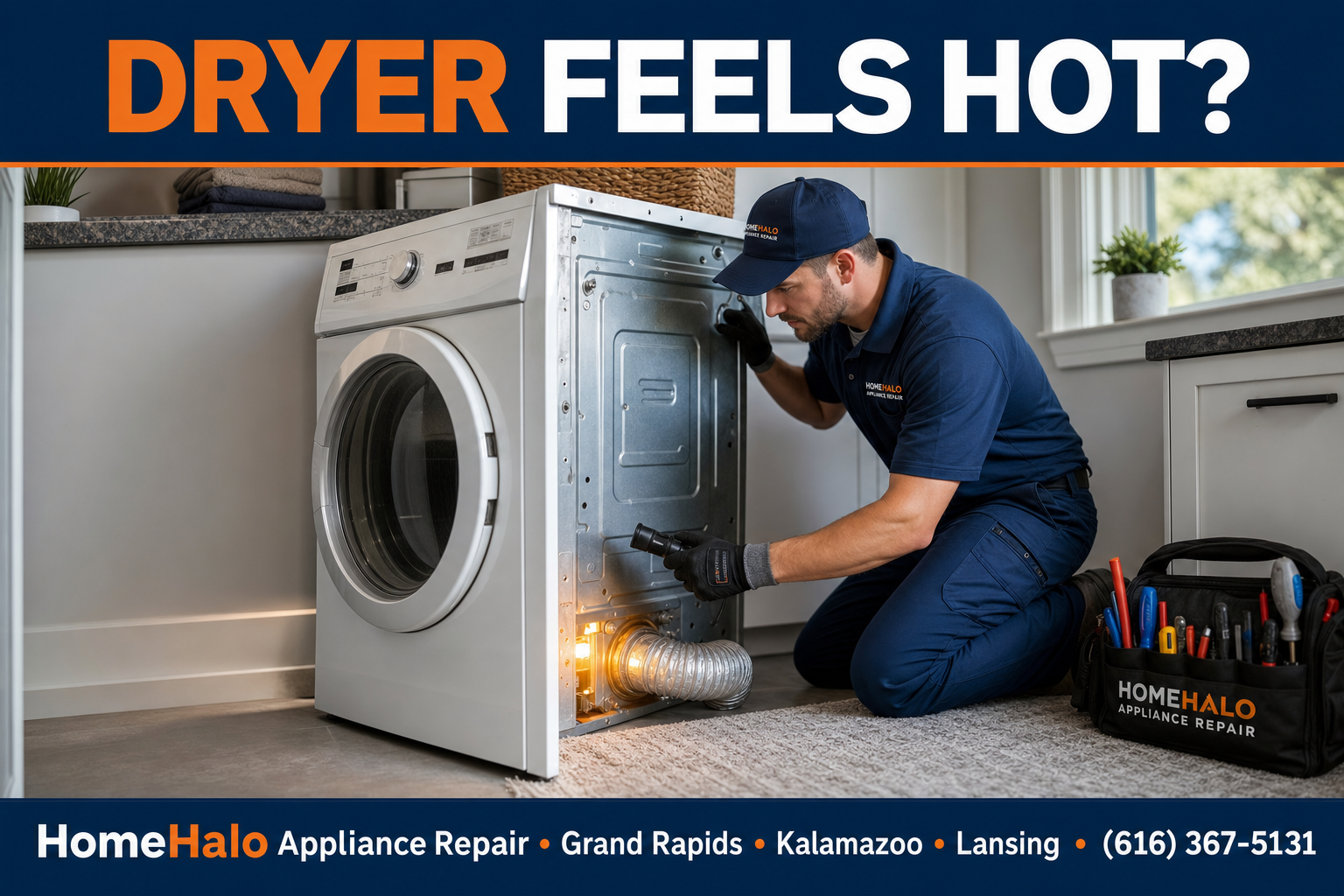
If your dryer feels hot on the outside, the most common cause is restricted airflow from a clogged lint screen, crushed vent hose, blocked exterior vent, or lint buildup inside the dryer cabinet. Stop the cycle, let the dryer cool, clean the lint screen, check the vent path, and do not keep running the dryer if you smell burning, see scorch marks, or the machine shuts off from overheating.
A warm dryer is normal. A dryer that feels unusually hot to the touch is not. In Grand Rapids, Kalamazoo, Lansing, and across West Michigan, this problem becomes more noticeable in late spring and summer when laundry loads are heavier, basements and laundry rooms are warmer, and dryer vents may already be packed with lint from winter use.
How Hot Is Too Hot for a Dryer Exterior?
The top and sides of a dryer can feel warm during a normal cycle, especially on high heat. You should be able to touch the exterior briefly without discomfort. If the cabinet feels hot enough that you pull your hand away quickly, the dryer smells hot, or nearby walls and shelves feel warm, treat it as a warning sign.
Heat has to move somewhere. In a healthy dryer, hot moist air moves from the drum through the lint screen, blower housing, vent hose, wall duct, and exterior vent cap. When that path is restricted, heat builds inside the appliance. The dryer may still tumble and finish the cycle, but it is working harder than it should.
That extra heat can damage thermostats, thermal fuses, wiring, belts, rollers, sensors, and clothing. More importantly, lint plus excess heat is a fire risk. If you also notice long dry times, start with our related guide on why a dryer takes too long to dry clothes.
Start With the Lint Screen
The lint screen is the easiest and safest first check. Pull it out and remove all lint before every load. If the screen looks clean but water beads on it when you rinse it at the sink, fabric softener residue may be blocking airflow through the mesh.
Wash the screen gently with warm water, mild dish soap, and a soft brush. Let it dry fully before putting it back. Do not use a damaged lint screen. A torn or warped screen can let lint move deeper into the dryer where it collects around the blower, heater, motor, and cabinet.
If cleaning the lint screen makes the dryer run cooler, keep watching the next few loads. If the dryer still feels hot, the restriction is probably farther down the vent path or inside the appliance.
Check the Vent Hose Behind the Dryer
Many overheating dryers have a simple airflow problem behind the machine. The flexible vent hose may be crushed, kinked, too long, or packed with lint. This is common after a dryer has been pushed back against the wall.
Unplug the dryer before moving it. For gas dryers, do not pull the unit far enough to strain or damage the gas line. Look behind the machine and check whether the vent hose has a smooth path to the wall. If it is flattened, sharply bent, or made of flimsy plastic or foil, airflow may be poor.
Rigid or semi-rigid metal venting is usually safer and moves air better than long, floppy hose runs. Keep the vent run as short and straight as practical. If the laundry area is tight, the dryer may need a low-profile vent connection to avoid crushing the hose again.
Make Sure the Exterior Vent Opens Fully
Walk outside while the dryer is running and check the exterior vent cap. You should feel strong airflow and see the flap or louvers open. Weak airflow outside usually means the duct is clogged, crushed, disconnected, or too long for the dryer to push air through effectively.
Look for lint stuck around the vent opening, bird nesting material, damaged louvers, pest screens clogged with lint, or landscaping blocking the outlet. In West Michigan, exterior vents can also collect leaves, cottonwood fluff, and debris during spring weather.
Do not ignore a vent that barely moves air. The dryer may continue heating, but the moisture and heat are not escaping properly. That leads to longer cycles, hot cabinet surfaces, and repeated part failures.
Watch for Burning Smells or Shutoffs
A dryer that feels hot and smells like burning needs immediate attention. Stop using it until the cause is found. A burning smell may come from lint near the heating element, a slipping belt, failing motor, scorched wiring, or overheated clothing.
Another warning sign is a dryer that runs for a while, shuts off, then works again after cooling down. That can point to overheating protection, a failing motor, or restricted venting. See our related article on dryers that overheat and shut off if that sounds familiar.
If the dryer repeatedly trips a breaker, leaves scorch marks, or makes a hot electrical smell, do not keep resetting it. Electrical symptoms should be handled by a qualified professional.
Internal Dryer Problems That Create Excess Heat
If the outside vent path is clear but the dryer still gets too hot, the problem may be inside the appliance. Common repair-related causes include:
- Failing cycling thermostat
- High-limit thermostat problems
- Shorted heating element
- Restricted blower wheel or blower housing
- Lint buildup inside the cabinet
- Weak motor or failing motor switch
- Damaged drum seals affecting airflow
- Control board or sensor issues
A shorted heating element can stay partially energized when it should cycle off. A clogged blower housing can keep air from moving even if the exterior duct looks fine. Bad drum seals can pull air from the wrong places, reducing the controlled airflow the dryer depends on.
These are not good guess-and-replace repairs. Dryers combine high heat, moving parts, and electrical or gas systems. A professional diagnosis is usually safer and cheaper than replacing parts until something works.
Gas Dryers Need Extra Caution
If you have a gas dryer, take overheating symptoms seriously. A gas dryer still uses electricity for controls and motor operation, but it also has a burner assembly, igniter, flame sensor, gas valve, and exhaust path that must operate safely.
If you smell gas, turn off the dryer, leave the area, and follow proper gas safety procedures. Do not troubleshoot a suspected gas leak yourself. If you smell a burning odor rather than gas, stop using the dryer and schedule service.
HomeHalo services both residential and commercial dryers across major brands in Grand Rapids, Kalamazoo, Lansing, and surrounding West Michigan communities.
How to Reduce Dryer Heat Problems
A few habits can prevent many overheating issues:
- Clean the lint screen before every load
- Avoid overloading the drum
- Separate heavy towels from lightweight clothes
- Use the correct heat setting for the fabric
- Keep the dryer area clear of boxes, laundry, and cleaning products
- Check the exterior vent every few months
- Have long or hidden dryer vents cleaned regularly
Overloading is worth calling out. A stuffed dryer restricts air movement through the clothes. The dryer then runs longer, heat builds, and damp items keep tumbling against hot surfaces. If towels or jeans routinely need extra cycles, airflow should be checked.
Should You Repair or Replace the Dryer?
If the dryer is less than 10 years old, heats, tumbles, and has no major rust or control problems, repair is often worth considering. Vent restrictions, thermostats, thermal fuses, belts, rollers, and many heating problems are usually more practical to address than replacing the whole appliance.
If the dryer is older, has repeated overheating problems, makes loud mechanical noises, and needs several major parts, replacement may make more sense. The right answer depends on the appliance age, brand, condition, and repair estimate.
HomeHalo’s diagnostic visit has an upfront fee and applies toward repair when appropriate. That gives you a clear repair-or-replace recommendation before you approve parts and labor.
When to Call HomeHalo
Call for dryer repair if the dryer feels unusually hot on the outside, dry times are getting longer, the machine shuts off mid-cycle, you smell burning, or the exterior vent has weak airflow even after basic cleaning.
HomeHalo Appliance Repair is family-owned and serves Grand Rapids, Kalamazoo, Lansing, and West Michigan. We repair all major dryer brands for residential and commercial customers, and we will help you understand whether the repair makes financial sense.
For help with a dryer that feels hot on the outside, call HomeHalo at (616) 367-5131 or use our verified contact page: https://homehalorepair.com/contact/.
Need appliance repair in West Michigan?
Same-day service available. Honest pricing. nearly 600 five-star reviews.
Find appliance repair near you
Need help with an appliance? Choose your nearest city to explore repair services and nearby coverage.
When to Call a Professional
- → The appliance makes burning, sparking, or unusual electrical smells
- → DIY troubleshooting hasn't resolved the issue after one attempt
- → The repair involves gas lines, electrical components, or sealed refrigerant systems
- → The appliance is still under warranty (DIY may void it)
HomeHalo serves Grand Rapids, Lansing, Kalamazoo & West Michigan. (616) 367-5131
💡 Key Takeaway
When in doubt, a professional diagnosis costs less than guessing wrong. HomeHalo provides free estimates and upfront quotes, you'll know the cost before any work begins. Call (616) 367-5131 for same-day service across West Michigan.