Oven door getting too hot? Learn what is normal, what is unsafe, and when West Michigan homeowners should call HomeHalo for oven repair.
If your oven door is getting so hot that it feels unsafe to touch, the direct answer is that some warmth is normal, but excessive heat can point to a damaged door gasket, loose hinge, misaligned door, failed cooling fan, cracked glass, insulation problem, or venting issue. Stop using the oven if the outside door is painfully hot, if nearby cabinets are heating up, if you smell burning, or if children could touch the door. A hot oven door is often repairable, but it should be diagnosed before heat damages controls, cabinetry, flooring, or the appliance itself.
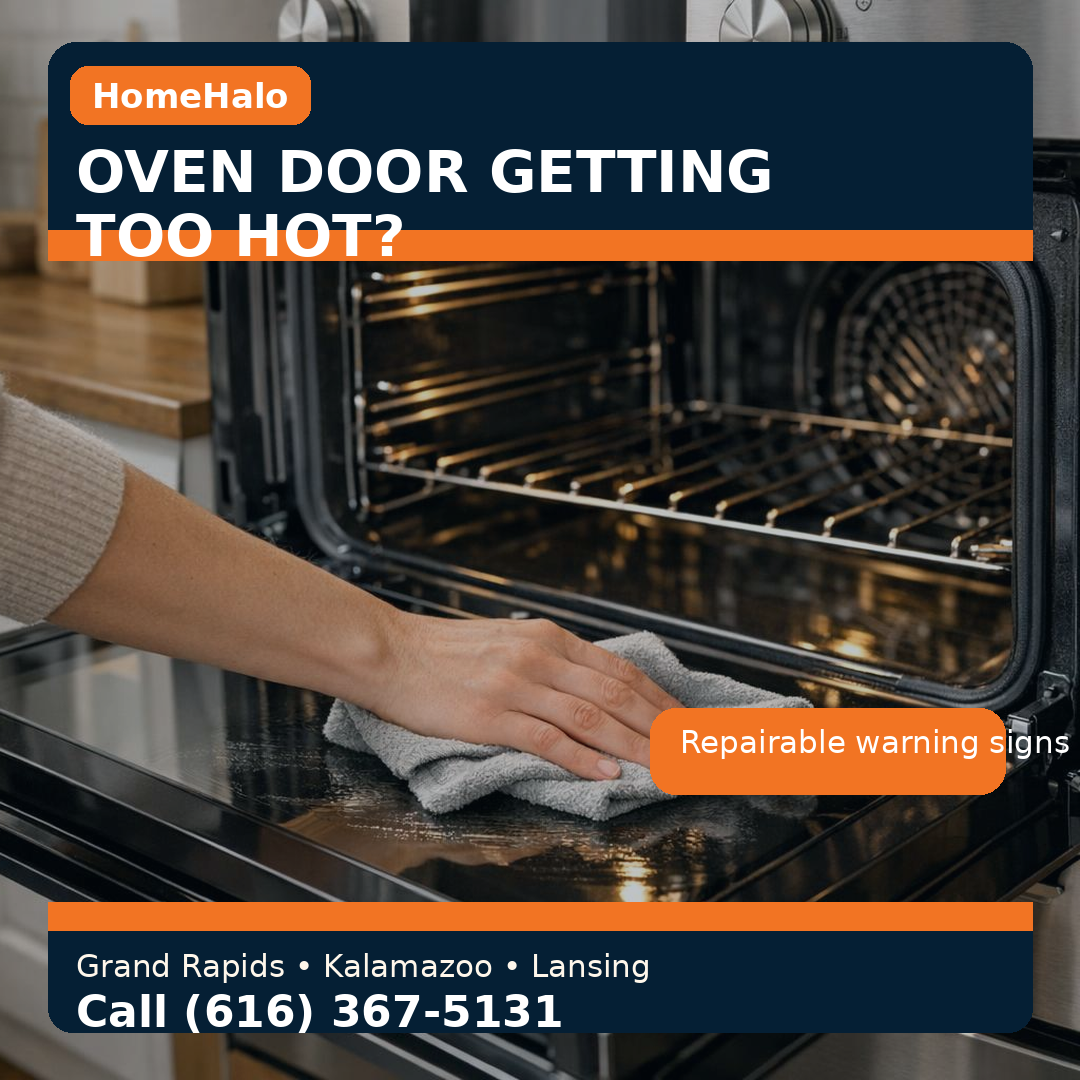
HomeHalo hears this concern from homeowners in Grand Rapids, Kalamazoo, Lansing, and across West Michigan, especially during summer when kitchens are already warm. Many ovens run at 350°F to 500°F inside, so the question is whether you are feeling normal surface warmth or hot air escaping where it should not.
How hot should an oven door feel?
A working oven door can feel warm during a long bake, roast, or broil cycle because heat transfers through glass, metal, and the oven frame. Newer ranges often use multiple glass layers and door insulation to keep exterior temperatures lower, but the outside still warms up.
What is not normal is a door that becomes too hot to touch briefly, a handle that feels unusually hot, a control panel that heats up, or cabinet edges beside the range becoming uncomfortable. If the door feels much hotter than it used to on the same temperature setting, treat that change as a clue. Ovens usually do not suddenly run hotter on the outside without a reason.
Also pay attention to timing. Warmth after an hour at 425°F is different from intense heat after ten minutes at 325°F. If heat builds quickly, the door seal, vent path, cooling fan, or door alignment deserves attention.
Start with the oven door gasket
The gasket is the flexible seal around the oven opening or door. Its job is to keep heat inside the oven cavity while the door is closed. When that gasket is torn, flattened, brittle, loose, packed with grease, or pulled out of its track, hot air escapes around the front of the appliance.
A leaking gasket can make the door, handle, control panel, and nearby cabinets feel hotter than normal. It can also cause uneven baking, longer preheat times, and higher energy use. If your oven has also been taking too long to preheat, compare the symptoms with our guide on why an oven takes so long to preheat.
Let the oven cool completely before inspecting the gasket. Look for gaps, hard spots, frayed corners, loose clips, or sections that no longer spring back. Do not glue the gasket in place unless your owner manual specifically calls for it. Oven door gaskets use heat-rated materials and attachment methods, and the wrong adhesive can smoke or fail.
Check whether the door closes evenly
A door that looks closed from across the kitchen may still be leaking heat. Hinges wear, racks get bumped, food spills harden near the frame, and door springs can lose tension. If one corner of the door sits proud of the frame, heat will escape through that gap.
When the oven is cool, open and close the door slowly. It should move smoothly, sit squarely, and pull itself closed. If the door drops too fast, rubs on one side, or needs a push to latch, the hinge system may be worn or misaligned.
Avoid forcing the door or using it as a shelf. A heavy roasting pan set on the open door can bend hinges or twist the door enough to create a permanent gap. That small gap can send hot air toward the control board and make the outside of the oven feel much hotter than before.
Door glass and insulation matter
Most modern oven doors are built with multiple layers of glass and insulation. If the inner glass is cracked, loose, missing a retainer, or coated with heavy grease, heat can transfer differently through the door. You may notice one side of the door hotter than the other or a hot stripe near the glass edge.
Do not run a self-clean cycle if the door glass is cracked or the gasket is damaged. Self-cleaning temperatures are extremely high and can make an existing door problem worse. For regular spills, use the cleaning method recommended by the manufacturer and avoid prying apart door glass unless the model is designed for service access.
If you recently cleaned between the glass layers, had the door removed, or replaced a handle, the door may not have been reassembled correctly. That is fixable, but it needs the right fastener order, glass spacing, and hinge seating.
Cooling fans and control-panel heat
Many wall ovens and some ranges use a cooling fan to move air around the control area. This is separate from a convection fan inside the oven cavity. If the cooling fan is weak, blocked, noisy, or not running, heat can build up near the electronics and make the front panel or upper door area feel hotter than normal.
You might hear a fan continue after the oven turns off. That can be normal. It helps protect electronics until temperatures drop. A problem is more likely if the control panel gets hot, the display flickers, the oven shuts down during long bakes, or an error code appears after high-temperature cooking.
Because cooling fan circuits involve electrical testing and sometimes tight built-in spaces, this is not a good guess-and-swap repair. A technician can confirm whether the fan is receiving voltage, whether the vent path is blocked, and whether the temperature sensor or control is contributing to the symptom.
Built-in ovens need room to breathe
A built-in wall oven depends on proper cabinet clearances and venting. If the oven was recently installed, moved, or surrounded by new trim, make sure the installation matches the manufacturer requirements. Blocking a front vent or squeezing the appliance into a tight cabinet can send heat into places it should not go.
For freestanding ranges, check that towels, pans, cutting boards, and foil are not blocking vents. Some ovens vent near a rear burner, under the control panel, or through the door area. Covering that path can make the exterior feel hotter and can affect baking performance.
West Michigan homes with older kitchens often have ranges tucked tightly between cabinets. A small amount of side warmth can be normal, but discoloration, peeling laminate, scorched trim, or a burning smell is not. Stop using the oven and schedule service if surrounding materials are being affected.
Be careful with self-clean cycles
Self-clean cycles create much higher temperatures than normal baking. If the door only feels very hot during self-clean, the extreme cycle may be the reason. Still, self-clean is hard on older ovens. A weak door gasket, aging control board, marginal cooling fan, or grease-heavy door can fail during or after the cycle.
If your oven already has door-seal symptoms, uneven baking, error codes, or a hot control panel, skip self-clean until the issue is diagnosed. For many households, a manual wipe-down after spills is gentler than frequent self-cleaning.
When a hot oven door is unsafe
Turn the oven off and let it cool if the door is too hot to touch, the handle is hot, the control panel is overheating, you smell electrical burning, you see smoke from the door area, or cabinet trim is discoloring. For gas ovens, leave the area and call for help immediately if you smell gas.
If children, pets, or guests can reach the oven, be extra cautious. Even a technically operating oven can be unsafe in a busy kitchen if the exterior temperature is unusually high. Do not rely on a towel over the handle as a fix; that can trap heat or become a fire hazard.
For related temperature issues inside the oven, see our article on why an oven temperature is wrong after preheating and our guide to oven repair costs in West Michigan.
Call HomeHalo for oven door heat problems
A hot oven door is usually worth diagnosing before replacing the appliance. Many causes are repairable: gaskets, hinges, door alignment, glass retainers, cooling fans, vent restrictions, sensors, and control-area issues. The right repair depends on where heat is escaping.
HomeHalo Appliance Repair services ovens, ranges, and stoves across Grand Rapids, Kalamazoo, Lansing, and surrounding West Michigan. Our diagnostic visit is $179 and applies toward repair when appropriate, so you get a clear explanation before approving work.
If your oven door is getting too hot and you want a local technician to check it safely, call HomeHalo at (616) 367-5131 or use our verified contact page at homehalorepair.com/contact/. We will help you keep the appliance repairable when repair makes sense and protect your kitchen from avoidable heat damage.
Need appliance repair in West Michigan?
Same-day service available. Honest pricing. nearly 600 five-star reviews.
Find appliance repair near you
Need help with an appliance? Choose your nearest city to explore repair services and nearby coverage.
When to Call a Professional
- → The appliance makes burning, sparking, or unusual electrical smells
- → DIY troubleshooting hasn't resolved the issue after one attempt
- → The repair involves gas lines, electrical components, or sealed refrigerant systems
- → The appliance is still under warranty (DIY may void it)
HomeHalo serves Grand Rapids, Lansing, Kalamazoo & West Michigan. (616) 367-5131
💡 Key Takeaway
When in doubt, a professional diagnosis costs less than guessing wrong. HomeHalo provides free estimates and upfront quotes, you'll know the cost before any work begins. Call (616) 367-5131 for same-day service across West Michigan.