
Learn why your refrigerator may leak water after a power outage, what to check first, and when West Michigan homeowners should call for repair help.
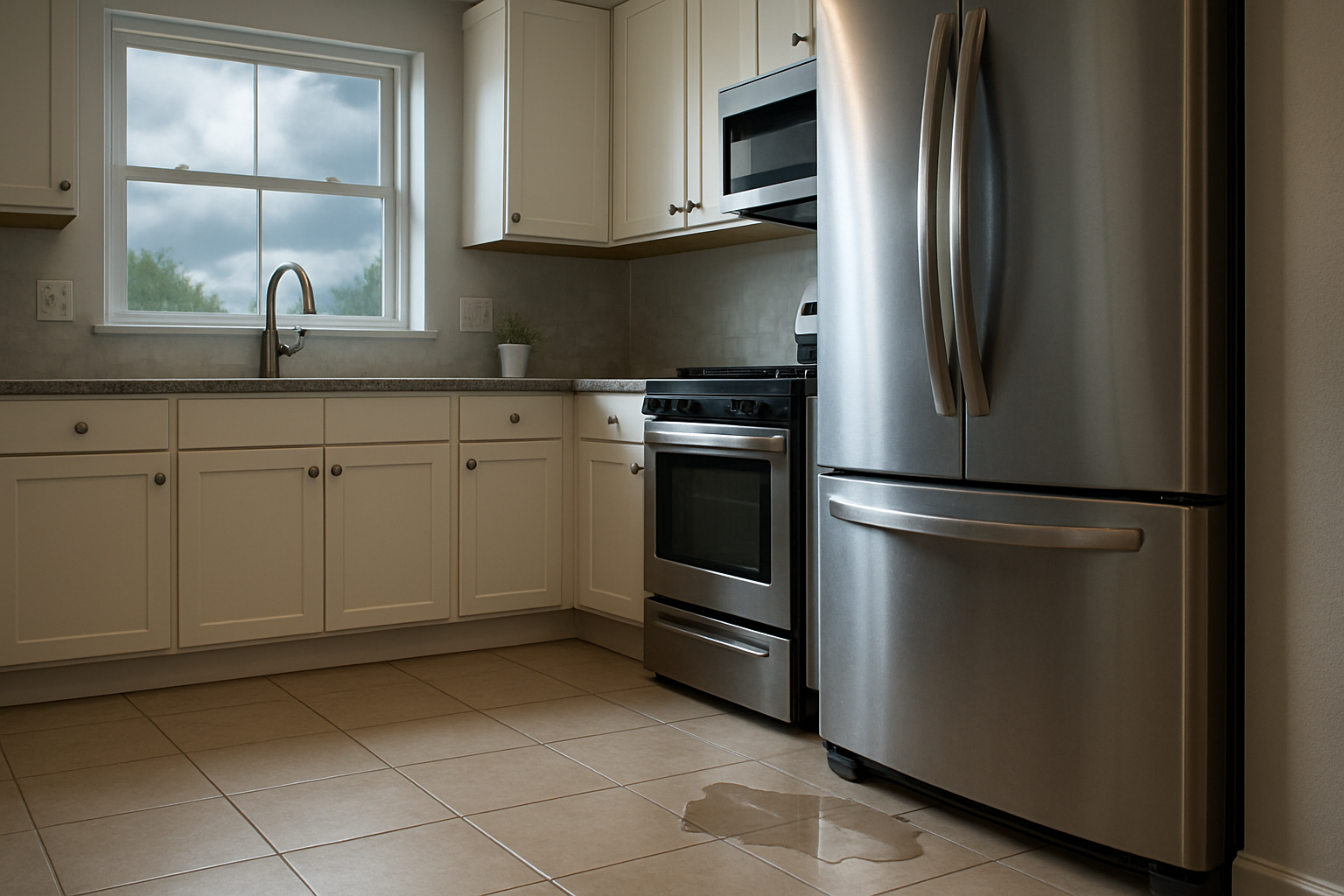
If your refrigerator starts leaking water after a power outage, the most common causes are a clogged or frozen defrost drain, melting ice from a temporary cooling failure, or an ice maker line that did not restart correctly when power came back on. In many Grand Rapids, Kalamazoo, and Lansing homes, the issue is not the outage itself, but the way the refrigerator cycles back on after being shut down for several hours. Some causes are minor, but water on the floor can also point to a failing fan, control board issue, or damaged water valve that needs professional repair.
Spring storms are common in West Michigan, so this is a problem HomeHalo hears about regularly. If you are dealing with a puddle under or inside the fridge, here is how to narrow down the cause and decide whether it is safe to keep using the appliance.
If the puddle returns or cooling has not recovered, our refrigerator repair service can investigate the drain, water supply and cooling system. Check service coverage and scheduling for Grand Rapids, Kalamazoo or Lansing; tell us when power returned and where you first saw water.
First, make sure the leak is really coming from the refrigerator
After a power outage, homeowners sometimes notice water near the refrigerator and assume a water line broke. Sometimes that is true, but sometimes the puddle came from melting frost or food condensation during the outage.
Before moving the refrigerator, check three places:
- Under the fresh food section drawers
- Around the freezer floor or back wall
- Behind the unit near the water supply line
If you see water inside the refrigerator compartment, the defrost drain is a likely suspect. If the water is mostly behind the appliance, the issue may be the supply line, inlet valve, or drain pan overflow. If your freezer thawed during the outage, you may also be seeing meltwater that had nowhere to go.
The most common cause: a clogged or frozen defrost drain
Most modern refrigerators remove frost automatically during the defrost cycle. That water is supposed to travel through a drain tube into a pan underneath the unit, where it evaporates. After a power outage, that system can get disrupted.
Here is what often happens:
- The freezer temperature rises during the outage.
- Frost and ice partially melt.
- When power returns, the refrigerator cools unevenly for a while.
- Water refreezes in the drain or debris shifts and blocks the tube.
- The next defrost cycle sends water into the fridge or onto the floor instead of into the pan.
This is especially common in older refrigerators or units that already had some dust, food debris, or ice buildup before the outage. If you have noticed water under the crisper drawers before, this is probably the same problem made worse by the outage.
For related leak symptoms, see our guide on refrigerator leaking water on floor.
Other reasons a refrigerator leaks after power comes back on
A power outage can expose several problems at once.
Melted ice from a warm freezer
If the outage lasted long enough for freezer ice to soften, you may simply be seeing leftover meltwater. Ice in the bin can partially thaw, drip, then refreeze into clumps. Food packages can sweat. Frost on the evaporator can melt faster than the drain can handle.
This type of leak usually slows down within 12 to 24 hours after the refrigerator returns to normal temperature. If the puddling continues beyond that, there is likely an underlying drain or cooling issue.
Ice maker fill problems
A refrigerator with an ice maker can leak after a power outage if the fill valve sticks open, the fill tube shifts, or the pressure changes when the system restarts. Sometimes the first batch of ice after an outage is irregular because the mold partially thawed and refroze.
Watch for these signs:
- Water pooling near the back lower corner of the refrigerator
- Hollow or misshapen ice cubes
- Ice clumps in the bin
- Water dripping from the ice maker area
Cracked or loose water supply line
When power returns, the ice maker or water dispenser may call for water again. If the line was already brittle, kinked, or loose, that restart can be when the leak finally becomes obvious. This is common in older installations, especially where the refrigerator has been pushed back too tightly against the wall.
Drain pan overflow or poor leveling
Every refrigerator has a drain pan underneath. If the appliance is not level or the pan is out of position, water may spill over instead of evaporating. This can show up after an outage because more water than usual moved through the system while the unit was recovering.
What you can safely check yourself
There are a few reasonable homeowner checks that do not involve taking apart sealed systems or handling live electrical components.
1. Confirm the refrigerator is cooling normally
Put a thermometer in both sections if you have one. A healthy refrigerator should settle near 37 to 40 degrees Fahrenheit, and the freezer should be near 0 degrees. If the refrigerator is leaking and also struggling to cool, the issue is more than a simple puddle.
Our article on refrigerator not cooling but freezer works explains some of the warning signs.
2. Check the door seals
If the door gaskets are not sealing well, humid April air in Michigan can enter the refrigerator, create excess condensation, and add to the water problem. Look for gaps, torn gasket sections, or doors that do not close fully.
3. Inspect the water line connection
Carefully pull the refrigerator forward and look at the supply line and shutoff connection. If you see active dripping, turn off the water supply to the fridge and stop using the ice maker until the problem is repaired.
4. Look for ice buildup around the drain area
In many refrigerators, a blocked defrost drain causes a sheet of ice on the freezer floor or water under deli drawers. If you see that pattern, the drain path is likely restricted.
5. Clean dust from the back and underneath
A refrigerator that overheated slightly when power returned may run longer than normal. Dirty condenser coils can make recovery slower and create more condensation. A basic cleaning helps performance and may prevent a second problem from developing.
When not to DIY the leak
Do not keep troubleshooting on your own if you notice any of the following:
- The refrigerator is warm and leaking at the same time
- You hear repeated clicking or buzzing after the outage
- The leak keeps returning after cleanup
- Water is reaching electrical components or flooring seams
- The ice maker area is freezing into a solid block
- The control panel is flashing errors or behaving strangely
A power outage can damage boards, sensors, and valves even when the refrigerator seems mostly functional. If you also had surge-related issues elsewhere in the house, read our guides on what to do after a power surge and protecting appliances during Michigan storm season.
How a technician diagnoses this problem
When HomeHalo diagnoses a refrigerator leak after an outage, we check the cooling pattern, inspect the defrost drain, test the water inlet valve, review ice maker operation, and look for control or fan failure. That matters because two leaks can look the same from the outside but have very different repair costs.
A simple blocked drain may be relatively straightforward to clear. A leaking inlet valve or damaged control board is a different repair path. If the refrigerator has been running warm since the outage, we also need to rule out evaporator fan problems, defrost heater issues, or a compressor starting problem.
HomeHalo’s diagnostic fee applies toward the repair when appropriate. That gives you a clear answer before you sink more time into cleanup, food loss, or repeat shutdowns.
How to reduce the chance of this happening again
Power outages are not fully avoidable in West Michigan, but you can reduce the odds of a refrigerator leak the next time storms hit.
- Keep condenser coils clean at least twice a year
- Replace old or brittle water lines before they fail
- Do not pack freezer vents too tightly with food
- Check door seals every season
- Use a surge protection strategy for sensitive appliances when possible
- If power is out for several hours, inspect the refrigerator closely during the first day after restart
Prevention is cheaper than floor damage, spoiled groceries, and emergency service.
The bottom line
If your refrigerator leaks water after a power outage, do not assume it will fix itself. Sometimes it is leftover meltwater and the problem stops. Often, the outage exposed a blocked drain, water line issue, or cooling problem that will keep coming back. Confirm whether the leak is temporary or a sign of a deeper repair need.
HomeHalo Appliance Repair serves Grand Rapids, Kalamazoo, Lansing, and surrounding West Michigan communities. If your refrigerator is leaking after a storm or outage, book service at https://homehalorepair.com/contact/ or call (616) 367-5131. We repair residential and commercial appliances across all major brands.
Need appliance repair in West Michigan?
Same-day service available. Honest pricing. nearly 600 five-star reviews.
Find appliance repair near you
Need help with an appliance? Choose your nearest city to explore repair services and nearby coverage.
When to Call a Professional
- → The appliance makes burning, sparking, or unusual electrical smells
- → DIY troubleshooting hasn't resolved the issue after one attempt
- → The repair involves gas lines, electrical components, or sealed refrigerant systems
- → The appliance is still under warranty (DIY may void it)
HomeHalo serves Grand Rapids, Lansing, Kalamazoo & West Michigan. (616) 367-5131
💡 Key Takeaway
When in doubt, a professional diagnosis costs less than guessing wrong. HomeHalo provides free estimates and upfront quotes, you'll know the cost before any work begins. Call (616) 367-5131 for same-day service across West Michigan.