If your washing machine is filling slowly, the usual causes are low water flow, clogged inlet screens, or a failing valve. Learn what to check first.
If your washing machine is filling so slowly, the most common causes are a partially closed water shutoff valve, kinked supply hoses, clogged inlet screens, low household water pressure, or a failing water inlet valve inside the washer. In Grand Rapids, Kalamazoo, Lansing, and across West Michigan, this is a common spring laundry problem because mineral buildup, sediment, and heavy family laundry loads can make a small water-flow issue show up fast.
A washer that fills slowly is not just annoying. It can stretch loads much longer than normal, leave clothes dirtier than they should be, and sometimes point to a part that is getting weaker over time. The good news is that some causes are simple to check safely. Others need a technician before the washer starts throwing fill errors, stopping mid-cycle, or refusing to run at all.
What a Slow-Filling Washer Usually Means
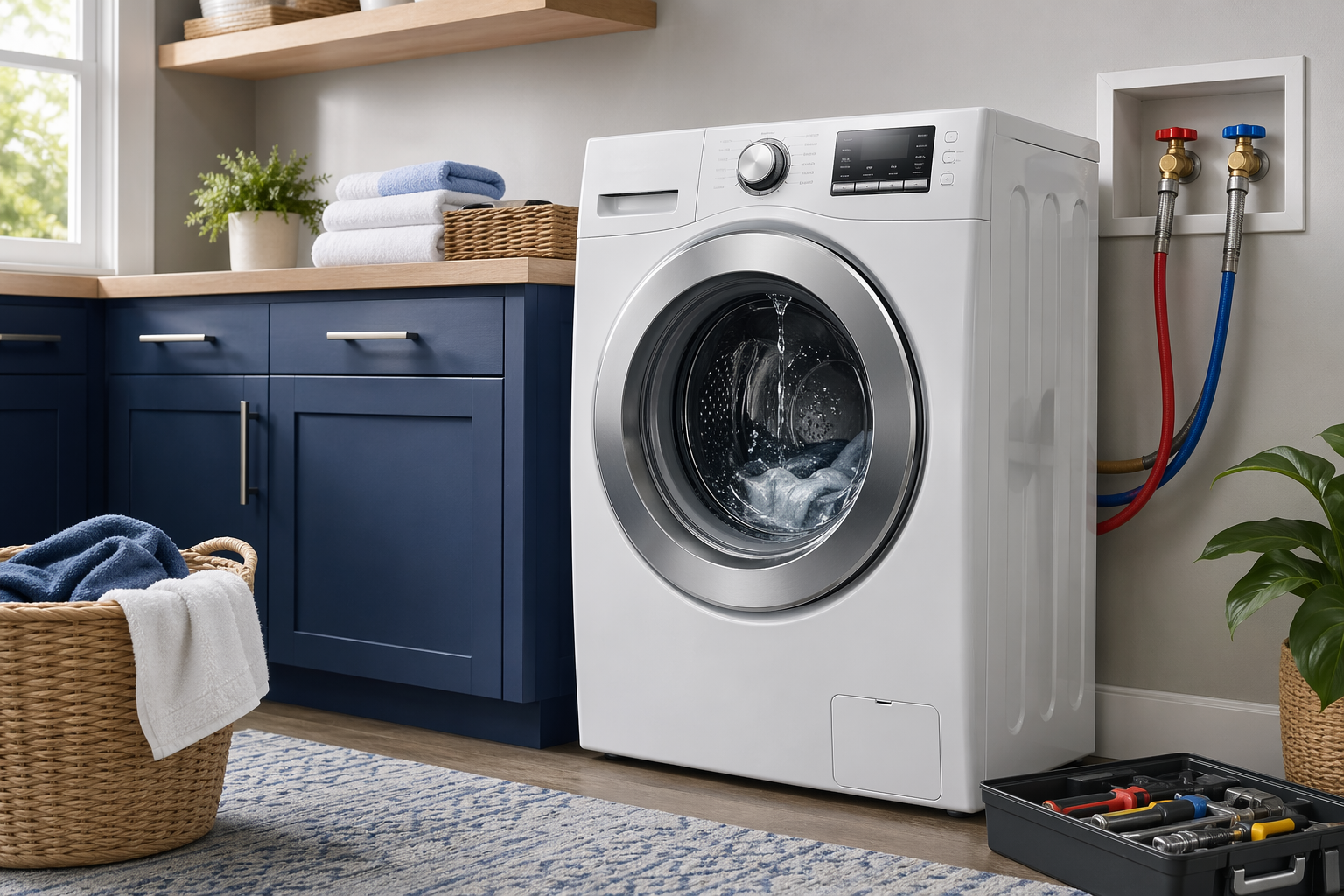
A washing machine is designed to bring in a set amount of water within a certain time. When that process slows down, the control board may keep waiting, add extra time to the cycle, or trigger an error code depending on the brand. Even if you do not see an error, a slow fill usually means water is being restricted somewhere between your home’s plumbing and the washer’s internal valve.
In many West Michigan homes, the issue is not one dramatic failure. It is a smaller restriction that has built up over time. Hard water deposits, rust from older plumbing, hose wear, or a valve that is not opening fully can all reduce the flow rate enough to affect performance.
First Checks You Can Do Safely
Before assuming the washer needs a repair, start with the simplest possibilities.
Make sure both water valves are fully open
Most washers use both hot and cold water, even on cycles that seem mostly cold. If one shutoff valve behind the machine is only partly open, the washer may fill more slowly than usual or stall while waiting for the missing temperature input.
Turn the washer off, pull it forward carefully if needed, and confirm both supply valves are fully open. Do not force a stiff valve too hard. If it feels corroded or fragile, stop there.
Check for kinked or crushed hoses
If the washer has been pushed back tightly against the wall, one of the fill hoses may be pinched. That restriction can dramatically reduce water flow without causing a leak. Look for bends, flattening, or signs of hose wear.
If a hose looks bulged, cracked, or brittle, it should be replaced rather than reused.
Compare hot and cold fill speed
Run a cycle that uses cold water, then one that uses warm or hot water if your washer settings allow it. If one side fills normally and the other is much slower, that points to a supply-side issue or an inlet problem on one side of the valve.
This quick comparison helps narrow down whether the restriction is happening at the plumbing connection or inside the appliance.
The Most Common Cause: Clogged Inlet Screens
One of the most common reasons a washing machine fills slowly is debris trapped in the inlet screens. These tiny mesh screens sit where the hoses connect to the washer. Their job is to catch sediment before it enters the valve assembly.
That protection helps the washer, but over time the screens can become packed with mineral deposits, sand-like grit, rust flakes, or other debris. When that happens, the washer still gets water, just not enough of it.
Signs the inlet screens may be clogged include:
- Fill times getting slower over several weeks or months
- One water temperature filling much slower than the other
- Buzzing or humming while the washer struggles to draw water
- Fill-related error codes on brands like Whirlpool, Maytag, LG, Samsung, or GE
If you are comfortable shutting off the water and disconnecting the hoses, the screens can sometimes be inspected carefully. They should never be punctured or aggressively scraped out because damage to the screen can create a bigger valve problem later.
When the Problem Is the Water Inlet Valve
If the supply hoses and inlet screens look fine, the next likely cause is the water inlet valve. This is the part inside the washer that opens electronically to let water into the tub.
When the valve starts failing, it may:
- Open too slowly
- Open only partway
- Fail on hot or cold but not both
- Make a humming noise without allowing enough water through
- Cause intermittent slow-fill behavior that gets worse over time
A weak valve often starts as a nuisance problem before becoming a no-fill problem. That is why it is smart to deal with a slow-fill washer before it leaves you with a half-finished load of laundry.
If you want more detail on valve-related symptoms, see our guide on washing machine water inlet valve problems.
Could Low Water Pressure in the House Be the Real Issue?
Yes. Sometimes the washer is not the real problem.
If you have noticed weaker sink flow, shower pressure changes, or slower fill times in multiple fixtures, the issue may be broader household water pressure rather than the appliance itself. This can happen after plumbing work, with partially closed main valves, pressure regulator issues, or sediment disturbances in the line.
In older homes around Grand Rapids and Kalamazoo, we also sometimes see plumbing-related sediment loosen up and travel into appliance lines. That can turn a house plumbing problem into an appliance performance problem.
If other fixtures seem normal and only the washer is affected, the problem is much more likely to be local to the washer or its hoses.
Brand-Specific Clues Homeowners Notice
Different brands can show slow-fill problems in slightly different ways.
Whirlpool and Maytag washers
These often show long-fill behavior before producing a more obvious fill error. Homeowners may notice the machine pausing for a long time at the start of the cycle.
LG and Samsung washers
These can be more sensitive to restricted flow and may stop the cycle sooner when fill timing is outside the expected range.
GE washers
GE models often make it more noticeable through cycle delays, incomplete sensing, or inconsistent water levels depending on the selected cycle.
The brand matters, but the root causes are usually still the same: supply restriction, sediment, pressure, or a failing valve.
What Not to Do
A few mistakes can turn a small repair into a bigger one.
Do not keep restarting the cycle over and over
If the washer is struggling to fill, repeated restarts do not solve the restriction. They just add wear and make the problem harder to diagnose.
Do not ignore it for weeks
A slow-fill issue usually gets worse, not better. What starts as an occasional annoyance can become a washer that times out, stops mid-cycle, or will not fill at all.
Do not assume detergent is the main cause
Detergent buildup can contribute to performance issues in some washers, but truly slow filling is more often about water flow than soap. If your washer also seems to have other water-related issues, our article on washing machine not filling with water may help you narrow it down further.
When to Call for Washer Repair
It is time to call for service if:
- The washer is taking much longer than normal to begin or complete a cycle
- Only hot or cold water is affected consistently
- You hear humming at the start of the cycle but little water enters
- The machine shows fill-related errors
- Cleaning the screens or checking the hoses did not solve it
- The problem keeps coming back
A technician can test the inlet valve, confirm whether the issue is electrical or mechanical, and rule out hidden supply restrictions without guesswork. Catching it early is usually much easier than waiting until the washer stops filling altogether.
Slow Fill Problems and Spring Laundry Season in Michigan
Late April and early spring are a common time for slow-fill complaints in West Michigan. Families are washing heavier loads after sports, yard work, rain, and changing weather, and sediment or mineral buildup that went unnoticed during winter can start affecting performance more clearly.
The Bottom Line
If your washing machine is filling slowly, start by checking the supply valves, hoses, and whether the problem affects hot water, cold water, or both. If those basics do not explain it, the most likely culprits are clogged inlet screens or a failing water inlet valve. Either way, it is worth addressing before the washer starts timing out or refusing to run.
HomeHalo Appliance Repair serves Grand Rapids, Kalamazoo, Lansing, and surrounding West Michigan communities. We repair residential and commercial washers across major brands. If your washer is filling slowly, stopping mid-cycle, or showing fill errors, call (616) 367-5131 or book service here: https://homehalorepair.com/contact/.
Need appliance repair in West Michigan?
Same-day service available. Honest pricing. nearly 600 five-star reviews.
Find appliance repair near you
Need help with an appliance? Choose your nearest city to explore repair services and nearby coverage.
When to Call a Professional
- → The appliance makes burning, sparking, or unusual electrical smells
- → DIY troubleshooting hasn't resolved the issue after one attempt
- → The repair involves gas lines, electrical components, or sealed refrigerant systems
- → The appliance is still under warranty (DIY may void it)
HomeHalo serves Grand Rapids, Lansing, Kalamazoo & West Michigan. (616) 367-5131
💡 Key Takeaway
When in doubt, a professional diagnosis costs less than guessing wrong. HomeHalo provides free estimates and upfront quotes, you'll know the cost before any work begins. Call (616) 367-5131 for same-day service across West Michigan.