Ice buildup in your freezer usually means warm air is getting in or defrost parts are failing. Learn what West Michigan homeowners should check first.
If there is ice building up in your freezer, the most common causes are a door that is not sealing tightly, moisture getting in from frequent opening, blocked vents, or a defrost problem. In Grand Rapids, Kalamazoo, Lansing, and across West Michigan, this often starts as a thin layer of frost on the back wall or around food packages, then turns into heavier ice that affects airflow and temperature. Some causes are simple to correct early, but if you ignore it, the freezer can start running longer, cooling unevenly, or stop protecting your food the way it should.
Spring is a common time to notice this problem in West Michigan because warmer, more humid air makes small sealing issues show up faster.
What freezer ice buildup usually means
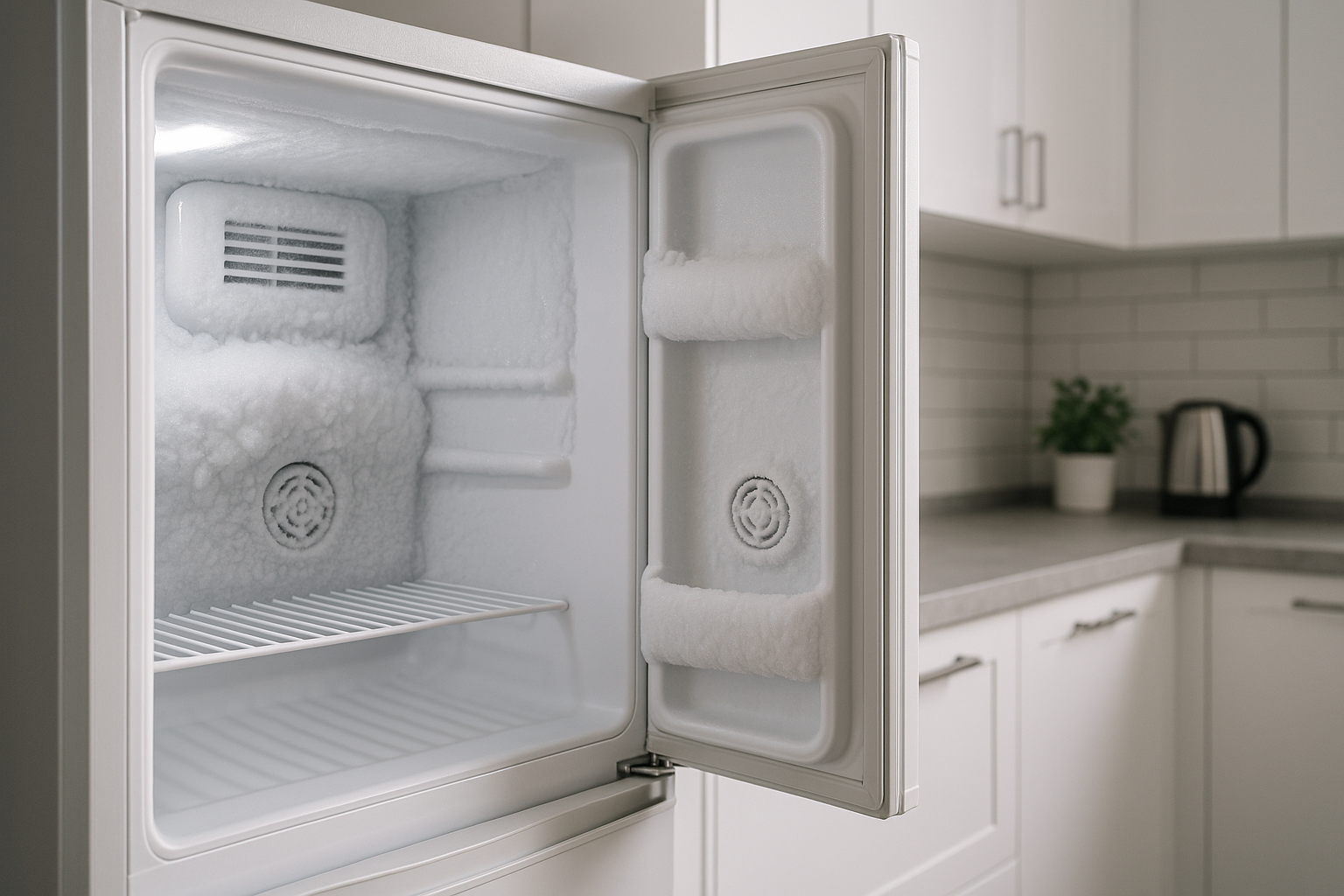
A healthy freezer should not have random sheets of frost or thick chunks of ice forming on shelves, drawers, the back wall, or around the door. When ice starts appearing there, one of two things is usually happening:
- Warm, moist air is getting into the freezer and freezing when it hits cold surfaces
- Frost that should be melting during the defrost cycle is not being cleared properly
That distinction matters because a small door-seal issue is very different from a failed heater, thermostat, or defrost control problem. The appearance of the ice gives clues.
- Light frost on food packages or around the top of the freezer often points to air leaks
- Thick frost on the back interior panel often points to a defrost issue
- Ice near the door edge often points to a gasket, alignment, or closing problem
- Ice on the freezer floor can point to a clogged defrost drain that is refreezing
If your refrigerator side is also starting to feel warmer than usual, do not wait too long. Airflow inside the appliance may already be restricted. You may also want to read Why Is My Refrigerator Not Keeping Food Cold? and Why Is My Refrigerator Leaking Water After a Power Outage?.
The most common cause: warm air leaking past the freezer door gasket
This is one of the first things we check. If the freezer door gasket is dirty, stiff, torn, or not sealing evenly, room air keeps entering the compartment. That air carries moisture. Once it hits the cold interior, it turns into frost and eventually into thicker ice.
In West Michigan homes, this is especially common when crumbs, sticky residue, or packaging debris collect along the gasket edge.
Look for these signs:
- Frost building up near the front edge of the freezer
- A door that feels easy to open and close without resistance
- Condensation near the gasket line
- Gaps, tears, or warped sections in the rubber seal
A quick test is the paper test. Close the freezer door on a dollar bill or sheet of paper in a few different spots. If it slides out with almost no resistance, the seal may be weak in that area.
Start by wiping the gasket and cabinet contact surface with warm water and mild soap. Sometimes grime is the whole issue. If the gasket is damaged or no longer sealing well, replacement is usually the right move.
A freezer packed too tightly can block airflow
A lot of homeowners assume more packed food means better efficiency. In reality, an overstuffed freezer can block vents and keep cold air from circulating correctly. That creates hot and cold spots, and those uneven temperatures often produce frost in specific zones.
Watch for these patterns:
- Frost concentrated around the back wall or vent openings
- Soft food in one drawer and rock-hard food in another
- Ice cream getting too soft while the back of the freezer looks frosty
If containers or grocery bags are pressed against the rear panel, pull them forward and create some breathing room. You do not need an empty freezer, but you do need space for air to move.
Frequent opening and humid kitchen air can make the problem worse
Not every ice buildup problem means a broken part. Sometimes the freezer is being opened constantly during meal prep, or the door is being left slightly ajar by a bulky package, pizza box, or ice bin that was not seated properly.
Spring and summer humidity in Grand Rapids, Kalamazoo, and Lansing can make this worse fast. A small amount of warm air entering the freezer again and again will create visible frost much faster than it does during colder, drier months.
Check for simple causes such as:
- A package preventing the door from closing all the way
- Kids grabbing snacks and leaving the freezer slightly open
- A warped shelf or drawer keeping the door from seating correctly
- The ice bin not installed properly after emptying it
Frost on the back wall often points to a defrost problem
If the ice is mostly collecting on the back interior wall of the freezer, the issue may be inside the sealed rear panel where the evaporator coil lives. Frost naturally forms there during normal operation. Your refrigerator is supposed to melt that frost on a regular schedule through the defrost system.
When the defrost system stops doing its job, frost keeps building until airflow drops and temperatures start drifting.
Possible causes include:
- A failed defrost heater
- A bad defrost thermostat or sensor
- A control board or timer problem
- Wiring damage in the defrost circuit
You can unplug the refrigerator and manually defrost it to buy time, but if the underlying part failure is not fixed, the ice will come back.
Ice on the freezer floor can mean a clogged defrost drain
Another pattern we see often is a sheet of ice on the bottom of the freezer or underneath the lower drawer. That can happen when defrost water is supposed to drain away but instead gets trapped, refreezes, and slowly builds into a thick layer.
A clogged defrost drain may be caused by food debris, sludge, or ice blocking the drain opening. If enough water backs up, you may also notice water leaking into the fresh food section or onto the floor later on.
If you are seeing both ice and water, this is a good clue that the drain path needs attention instead of just the door gasket.
What you can check before calling for repair
There are a few safe first steps that make sense before scheduling service:
1. Inspect and clean the gasket
Wipe the gasket thoroughly and look for tears, flattening, or stiffness.
2. Make sure the door closes fully
Rearrange food and remove anything that could block the door or drawers.
3. Check for blocked vents
Leave space around the back wall and interior air passages.
4. Look at where the ice is forming
Door edge, back wall, and floor buildup point to different problems.
5. Defrost minor buildup early
If the issue is light and recent, removing the frost now may help prevent airflow problems while you figure out the cause.
Do not chip at freezer ice with a knife, screwdriver, or metal tool. That is a fast way to damage interior panels or puncture a refrigerant line.
When freezer ice buildup needs a professional diagnosis
Call for professional repair if:
- The ice keeps coming back after you clear it
- The refrigerator side is getting warm
- The freezer is running constantly or sounding louder than usual
- You see heavy frost on the back wall
- There is ice on the floor of the freezer or water leaking elsewhere
- The door gasket looks fine but the problem keeps returning
At that point, the issue is often a failed gasket, a drain blockage, or a defrost system component that needs testing.
Is it safe to keep using the freezer?
Sometimes yes. If you only see a little frost near the door and temperatures are staying normal, you may have time to correct a simple sealing issue. If the freezer is struggling to hold temperature, food is softening, or the refrigerator section is warming up too, address it quickly.
Poor airflow can overwork the compressor and fans.
HomeHalo can help West Michigan homeowners get ahead of it
If there is ice building up in your freezer and you want a clear answer instead of guesswork, HomeHalo Appliance Repair can help. We service refrigerators in Grand Rapids, Kalamazoo, Lansing, and surrounding West Michigan communities. Our diagnostic fee applies toward the repair when appropriate.
We work on all major brands for residential and commercial customers. If your refrigerator or freezer is frosting up, running warm, or leaking, call (616) 367-5131 or book service here: https://homehalorepair.com/contact/.
Need appliance repair in West Michigan?
Same-day service available. Honest pricing. nearly 600 five-star reviews.
Find appliance repair near you
Need help with an appliance? Choose your nearest city to explore repair services and nearby coverage.
When to Call a Professional
- → The appliance makes burning, sparking, or unusual electrical smells
- → DIY troubleshooting hasn't resolved the issue after one attempt
- → The repair involves gas lines, electrical components, or sealed refrigerant systems
- → The appliance is still under warranty (DIY may void it)
HomeHalo serves Grand Rapids, Lansing, Kalamazoo & West Michigan. (616) 367-5131
💡 Key Takeaway
When in doubt, a professional diagnosis costs less than guessing wrong. HomeHalo provides free estimates and upfront quotes, you'll know the cost before any work begins. Call (616) 367-5131 for same-day service across West Michigan.